
Karga : A new approach to core exercise for cyclists
Founders movement coach Peter Gallagher & chartered physiotherapist Sid Ahamed MCSP explain how Karga can benefit cyclists of all levels of ability.
Our Introductory article explained how the core muscles function generally. In this article we will explain core function related to cycling. ( We recommend that you read ‘An Introduction to Karga’ prior to reading sport specific articles )
So what is the Core ?
As noted in our Introduction we view the core as a functional control unit comprising the muscles that connect the ribcage to the pelvis. Where we differ from traditional core theory is that we also consider the myofascial connection of the core with the peripheral muscles via anatomical chains.
Challenge to the core alters as rider position changes due to demand and factors such as weather conditions, gradient and surface quality. One long ride can throw up multiple challenges requiring different postures and thus differing demand on the core muscles. Different cycling disciplines amplify these varying demands. Coaches therefore place emphasis on core strength and control.
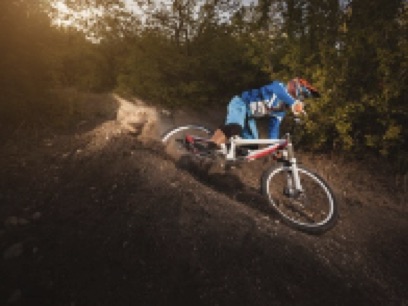
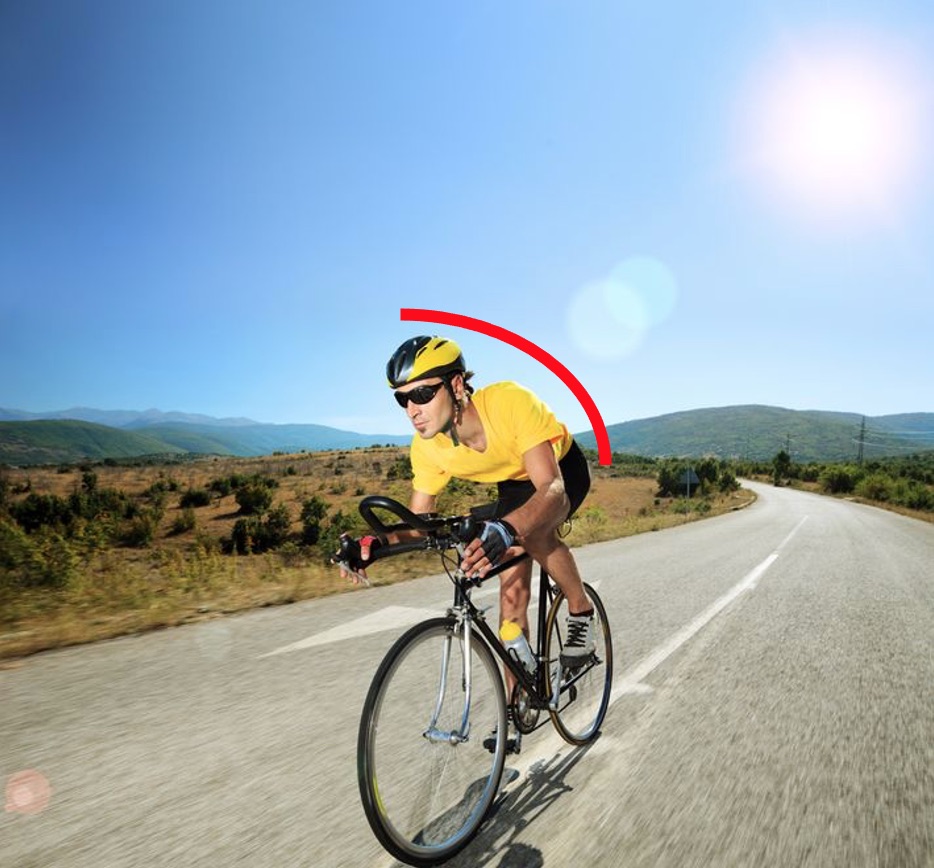
The core in cycling is often required to function in different spinal postures as seen here, not simply in the idealised position of the neutral spine. Karga exercises are thus targeted at controlling a dynamic spine so athletes learn control in different postures.
So how does the core function in cycling ?
We saw in our introduction that runners generate tension in the core providing trunk and pelvic control giving the legs a stable base to work off. They also use a mechanism called elastic force transfer through the core. Force transference is why runners drive their arms. The energy created in the upper limbs flows through the core increasing power to the legs via diagonal energy transfer.
Similar to runners the primary function of the core in cycling is to control spinal and pelvic posture providing the legs a stable base to work off. Hence a strong core allows the rider to transfer maximum power to the pedals and allows them to control the bike in challenging circumstances.
In certain circumstances cyclists also employ elastic transfer of energy through the core from the upper limbs. This is often called opposing tension in the cycling literature. This diagonal energy transfer can be observed when high levels of power are needed such as in climbing or sprinting when the bike is rocked from side to side but the cyclists trunk remains stable and travels in a straight line.
Karga can be used to train this important power generating mechanism.
Cycling and the secondary support muscles
Poor core function can also lead to discomfort and eventually injury. Most cyclists are familiar with the annoying pain that develops on long rides in the neck-shoulder, upper thoracic and lower back areas. This often occurs despite riders having had a professional bike fit. Such discomfort often starts later in a ride as the core begins to fatigue and the body recruits the para-spinal muscles to help. Hence one of the factors causing discomfort is that the recruited muscles are working in a secondary function they are not used to, they quickly tire leading to cramping and pain.
Karga can be used to develop an efficient core and to condition the secondary support structure of the axial and peripheral muscles.
Cyclists and Flexibility
Many cyclists neglect flexibility, a lack of which is harmful and can lead to inhibition of the core and thus loss of form as we saw in our Straight leg raise test in ‘An Introduction to Karga‘
In our straight leg test, limitation of the back line structures makes it difficult to complete the task and such limitation in a cyclist makes it difficult to maintain a good low racing position on the drops.
The race position depicted below is generally not adopted for long periods by amateur cyclists for a couple of reasons :
- They lack the appropriate flexibility in the back line structures to hold this position for any significant amount of time. The position stretches the tight muscles and connective tissues leading to strain and discomfort.
- The limited mobility inhibits the core, reduces available elastic energy transfer and thus less power is available to the legs. To explore this try working on a Turbo trainer in different positions. Most amateurs lose power transmission to the pedals as they strive for the professionals flexed racing posture.
Karga can be used to develop connected mobility throughout the body, conditioning the cyclist and enabling them to adopt the required postures on the bike more easily.
Practical work and training
Karga for cyclists
Karga can thus be used as part of a cyclists training program.
As with all sports athletes are encouraged to adopt a whole body approach and cyclists often perform the full range of Karga drills.
Our experience demonstrates that many cyclists have some specific limitations :
In the back line structures which as stated prevents them adopting optimum racing postures. We therefore place particular emphasis on exercises that mobilise the back line.

Restriction in the back line is not the whole story. Cyclists, often due to long hours in the saddle, have restriction of the anterior line structures and use exercises such as the yoga stretch the cobra. Karga builds on these and provides a whole range of exercises designed specifically for cyclists to develop flexibility whilst building control in the connected core.