
Karga : A new approach to core exercise for tennis players:
Founders movement coach Peter Gallagher & chartered physiotherapist Sid Ahamed MCSP explain how Karga can benefit tennis players of all levels of ability.
Our Introductory article explained how the core muscles function generally. In this article we will explain core function related to tennis. ( We recommend that you read ‘An Introduction to Karga’ prior to reading sport specific articles )
So how does the core function in Tennis?
As noted in our Introduction we view the core as a functional control unit comprising the muscles that connect the ribcage to the pelvis. We discussed that our view differs from traditional core theory in some key areas as explored below
Tennis is a dynamic sport which places huge demand on the core. The constant reactivity needed to respond to changes in the direction of movement, the variety of shots and techniques and the differing dynamic postures adopted is almost mind boggling.
During play the idealised position of neutral spine, with constant length demonstrated between the bottom of the ribcage and the top of the pelvis may be adopted at certain times. Hence traditional core exercises such as the plank which develop this ability to maintain a fixed distance and posture between the ribs and pelvis can be helpful. Karga adds a further dimension and takes a more functional approach to respond to the everchanging demand when neutral spine cannot be employed.
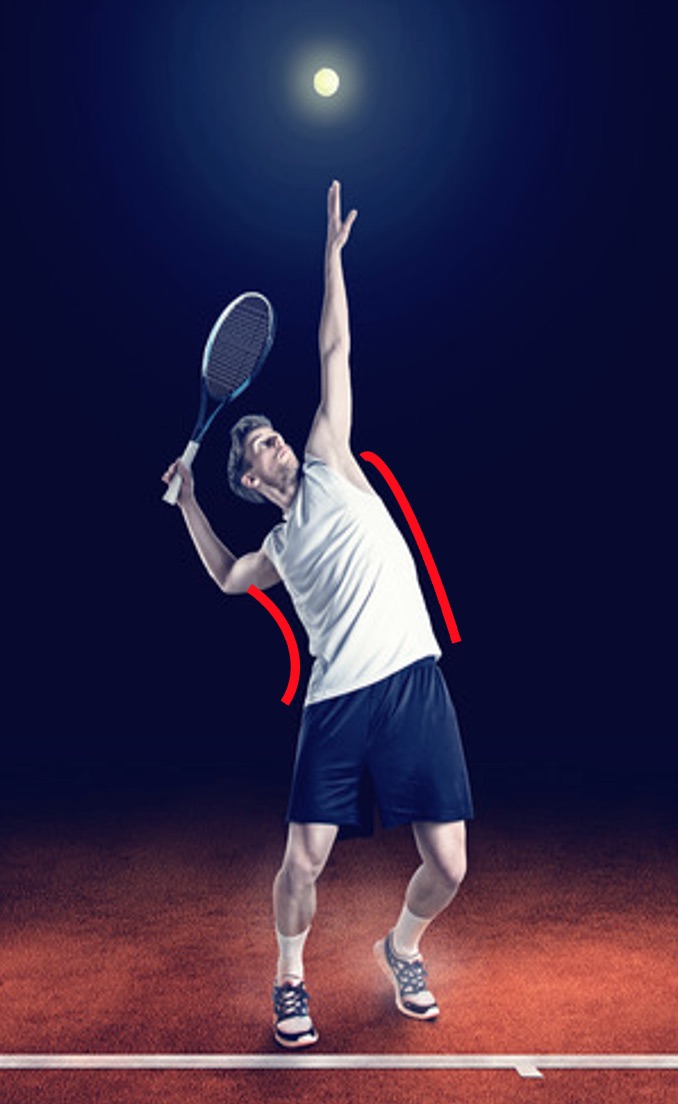
During a tennis serve if the core muscles maintained constant length on both sides of the midline the server would be unable to fully lengthen the arm and body on his throwing side. He could not therefore achieve the elongated position required leading to poor technique, compensation and strain elsewhere.
The core here must allow elastic energy transfer between the limbs, assist in control of the momentum of the moving limbs and trunk and provide dynamic stability and optimum dynamic posture.
Karga trains the core improving such dynamic function.
We saw in our introduction that runners generate tension in the core providing trunk and pelvic control which gives the legs a stable base to work off. Tennis players have a similar requirement often adopting a wide stance controlled by the core to provide a stable base to play a stroke from.

A stable base also maximises the efficiency of a core mechanism called elastic force transfer through the core. As we saw in our introductory article diagonal force transference through the core is why runners drive their arms allowing energy created in the upper limbs to flow through the core increasing power to the legs via diagonal energy transfer.
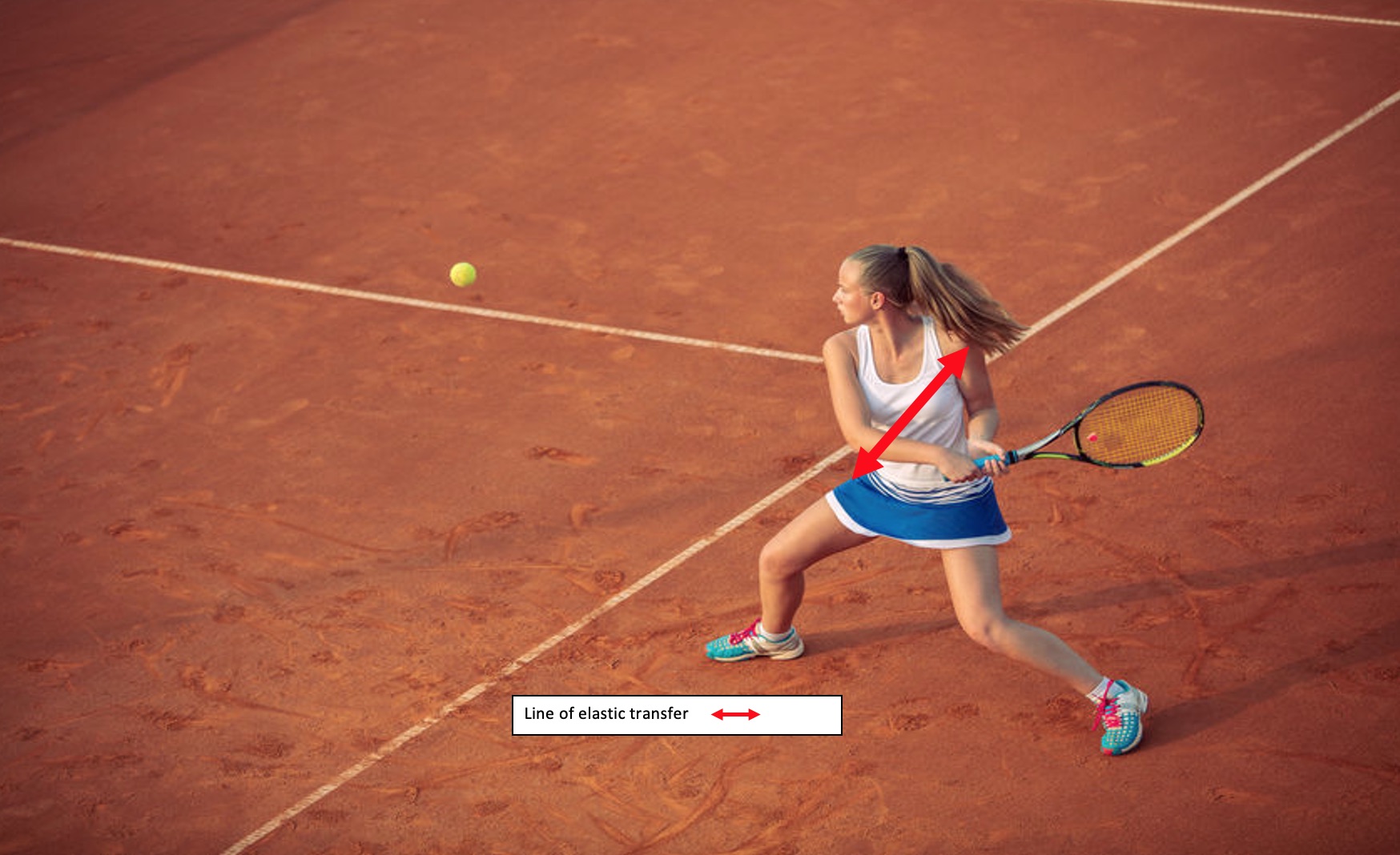
These wide stances allow maximal diagonal elastic energy transfer through the core. Karga can be used to help develop this important power generating mechanism
To make matters even more difficult players often play shots with one or both feet off the ground. In these circumstances the core needs to maintain its ability to control trunk posture, to facilitate elastic transfer from upper to lower limbs and stillultimately to provide control.
Karga develops this important function
Tennis coaches understand the importance of an efficient dynamic functional core which allows the player to transfer maximum power to the racket, crucially with control, allowing for accurate shot placement. In all sports where accuracy and power are critical reactive functional core control is key and this is where Karga has proved so useful to coaches, athletes and physiotherapists.
Tennis and Flexibility
Many tennis players neglect flexibility training, a lack of which is harmful and can lead to inhibition of the core and thus loss of form as we saw in our Straight leg raise test in ‘An Introduction to Karga‘
In our straight leg test, limitation of the back line structures makes it difficult to complete the task and such limitation in a tennis player makes it difficult to attain the required optimum positions required or to control their movement. Many amateurs cannot attain the most efficient serving posture and technique due to a lack of flexibility :
I They lack the appropriate flexibility in the lateral, spiral and anterior line structures to attain the required posture. Attempting optimum technique therefore stretches the tight muscles and connective tissues leading to strain, misfiring in the muscular chains, altered technique and thus poor performance. Many amateurs therefore adopt poor technique leading to weak low velocity and inaccurate serving.
II The limited mobility also inhibits core function, reducing stability and available elastic energy transfer and thus less power is available to the serving arm.
Limitation in the spiral, lateral and anterior myofascial chains ( see introductory article ) prevents the correct technique being attained and inhibits core function reducing available power and control
Karga can be used to develop connected mobility and core function
Karga Training for Tennis
Image credits for this page (in order):
123rf Copyright : lassedesignen
123rf Copyright : fsstock
123rf Copyright : fsstock
123rf Copyright : lassedesignen
123rf : Copyright : Kirsty Pargeter